

Onderhoud 3 min lezen
Which disinfectant do you choose for earrings? An honest comparison
In dit artikel
Caring for an ear piercing seems simple until you're standing in front of the pharmacy shelf. Which bottle do you grab? In this guide, we compare five commonly used disinfectants, explain what they do for your ears – and more importantly, what they better not do. We conclude with the question most people forget to ask: what do you do if no remedy provides structural help?
1. Saline solution — our number 1 for daily use
A quarter teaspoon of sea salt in a cup of lukewarm, boiled water. It doesn't get cheaper or milder than this, and it's exactly what most tattoo artists and piercers recommend today for new piercings.
Pros: mild, no skin irritation, supports natural wound healing, perfect for sensitive ears. Cons: requires making a fresh solution daily; not effective as a fast-acting agent for an active bacterial infection. When to choose it: new piercings, daily maintenance, minor irritation, after a day of swimming.
2. Octenisept (octenidine) — strong yet skin-friendly
A ready-to-use spray available at any pharmacy. Octenisept kills bacteria, fungi, and some viruses, and you barely feel it. Recommended by dermatologists for wound care.
Pros: powerful without stinging, colorless, easy to use. Cons: more expensive than saline solution, not for spraying deep into the canal. When to choose it: fresh piercing, suspected infection, after contact with unhygienic environments (swimming, hairdresser, sports class).
3. Chlorhexidine 0.1% aqueous solution — the classic
Long been the standard in hospitals and among piercers. Works antibacterially and remains active longer on the skin.
Pros: long-lasting effect, broad antibacterial, well-known and reliable. Cons: can cause allergy after prolonged use (rare), stains certain fabrics. When to choose it: after a piercing, to support a mild infection. Important: always use the aqueous (0.1%) version, not the alcoholic version. The bottle will clearly state this.
4. Sterilon (povidone-iodine) — for occasional use
The brown bottle from your parents' medicine cabinet. Works strongly antibacterial but stains and is more drying for the skin.
Pros: powerful for infections. Cons: dries out skin, stains textiles and skin brown, not for people with thyroid conditions or iodine allergies. When to choose it: preferably not for daily use. Rather once for a suspected infection and on a doctor's advice.
5. Chamomile tea — popular but overrated
Chamomile tea as a compress is often mentioned on forums. It is primarily soothing, but contains too few active ingredients to combat a real infection.
Pros: mild, soothing feeling, no skin irritation. Cons: antibacterial effect is limited, can even introduce bacteria if the tea is not fresh. When to choose it: as a supplement for irritation, not as a primary treatment.
What NOT to use
- Disinfectant alcohol or hydrogen peroxide. Too aggressive, slow down wound healing. Read why in our blog should you disinfect earrings with alcohol?
- Mercurochrome or other brightly colored disinfectants. Outdated and no longer permitted in many countries.
- Mouthwash. Contains alcohol and flavorings, not intended for skin wounds.
- Antibiotic creams without a doctor's prescription. Increases the risk of resistance and allergy.
The simple decision tree
- New piercing, no pain: saline solution is sufficient.
- Mildly irritated: saline solution + once daily octenisept or chlorhexidine 0.1%.
- Suspected infection (warm, swollen, yellow-green pus): octenisept or chlorhexidine 0.1%, and if no improvement after 2-3 days, contact your doctor.
- Recurring irritation: disinfectant won't solve it. Read on — that's where the real solution lies.
What if no remedy provides structural help?
Then you are probably treating the symptom, not the cause. In practice, this very often comes down to one of these two things:
- 1. Your earrings contain nickel. Many cheap or unidentified alloys do. A nickel allergy can develop at any age and remains lifelong. No disinfectant will solve that.
- 2. You wear models that are too heavy for your ears. This keeps the canal mechanically irritated and prevents it from healing completely.
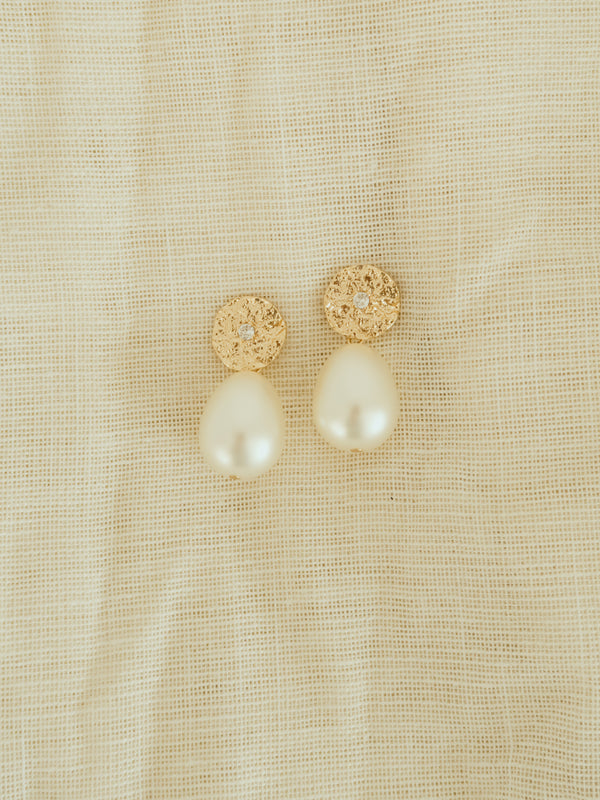
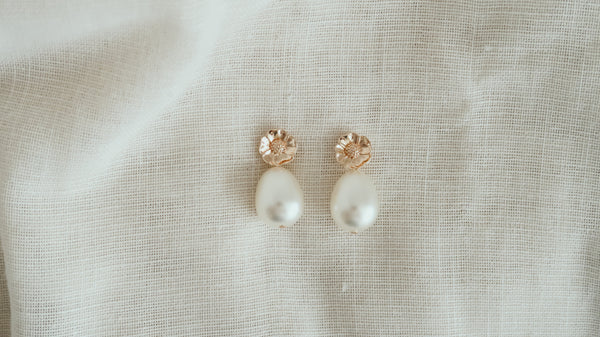
The sustainable solution: choose earrings that are demonstrably 100% nickel-free and lightweight. All Petit Bonbon models meet both criteria. We are a handmade Belgian brand from Dendermonde, born from precisely that frustration – earrings that look beautiful and are still comfortable tomorrow. Lightweight favorites for healing ears: Sofie veil, Manou and Kaia oat.
Want to know more about why material is the most important part of an earring? Read our guide on nickel-free earrings for sensitive ears. Or explore our collection right away – handmade, hypoallergenic, and designed for all-day wear.
This is general information and not medical advice. In case of doubt, consult your pharmacist or doctor.
Shop dit artikel
Kind to sensitive ears
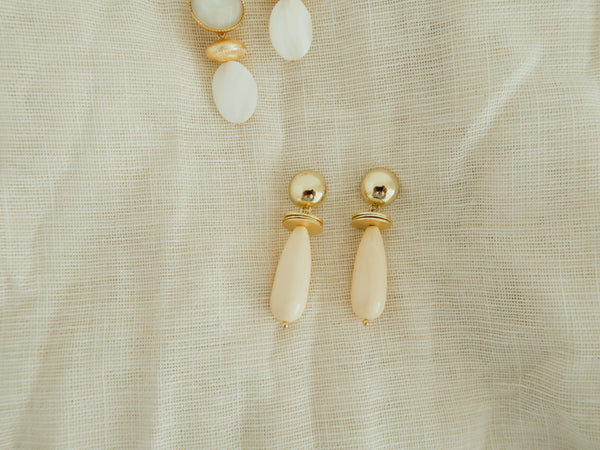
All Petit Bonbon earrings are 100% nickel-free, lead-free and cadmium-free — handmade in Dendermonde, made for comfortable everyday wear.
Discover moreMake your outfit stand out
Handcrafted statement earrings







Bruidsoorbellen kiezen per decolleté: V-hals, kant, halter
Je trouwjurk heb je gevonden, en nu komen de details die je look afmaken. Oorbellen lijken misschien een kleinigheid, maar ze zitten net naast je gezicht en bepalen mee hoe verzorgd en harmonieus j...
Read more
Stabbing pains in your earlobe: why it feels that way and what helps
A sudden stab in your earlobe, as if a pin is pricked for a moment: it's an annoying sensation that many people recognize. Sometimes it happens while you're wearing an earring, sometimes out of the...
Read more
Leave a comment